0.03, 0.05 or 0.07? A Guide to Volume Lash Diameters
Understanding Volume Lash Diameters
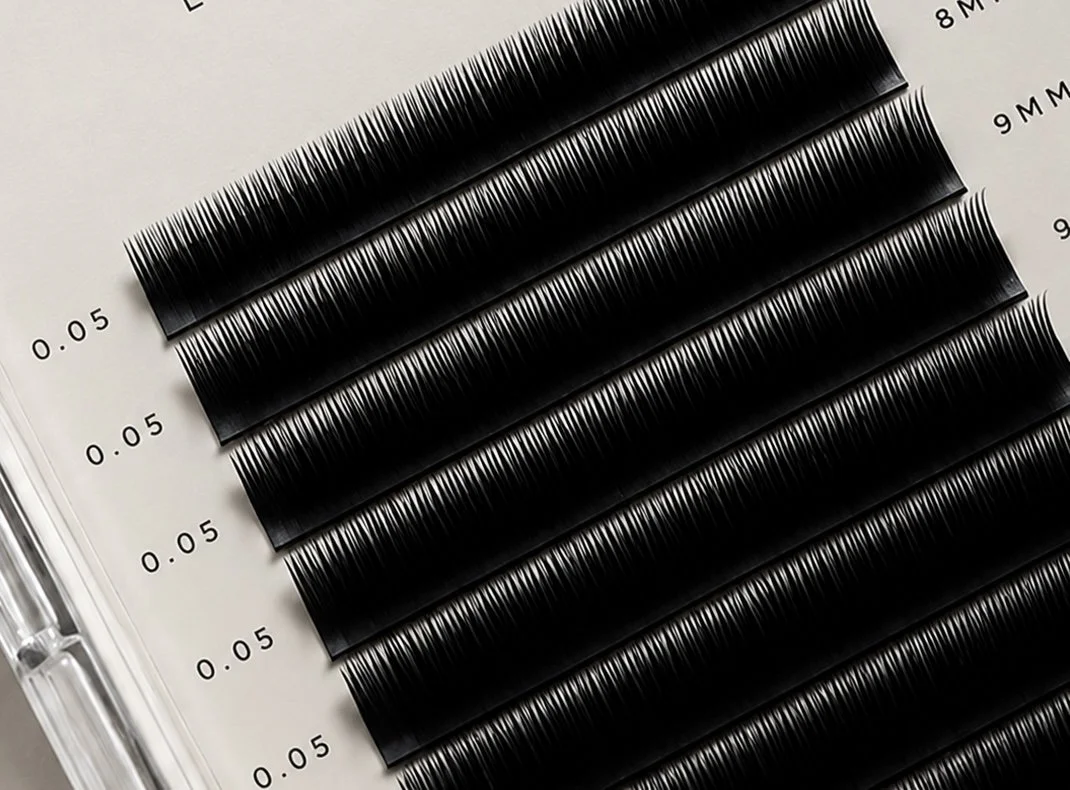
When choosing volume lash extensions, diameter is one of the most important specifications to understand. It influences the weight of each extension, the way fibres behave when forming a fan and the overall effect an artist can create.
The most commonly discussed diameters for volume lashing include 0.03 mm, 0.05 mm and 0.07 mm. Although the difference between these measurements appears small, it can significantly affect the weight of an individual extension and the number of extensions that can be incorporated into a suitable fan.
For professional lash artists, understanding these differences is essential when selecting volume lash trays, planning fan dimensions and working with different natural lash characteristics.
In this guide, we'll compare 0.03, 0.05 and 0.07 lash extensions, explain how diameter influences volume techniques and explore the factors to consider when choosing the right specification for your work.
What Does Lash Extension Diameter Mean?
Lash extension diameter refers to the thickness of an individual extension, measured in millimetres.
For example, a 0.03 mm lash has a smaller diameter than a 0.05 mm lash, while a 0.07 mm lash is thicker than both.
In volume lashing, artists apply fans containing multiple extensions to individual natural lashes. Because each fan contains several fibres, the diameter of those fibres plays an important role in determining the fan's overall weight.
A thinner extension generally allows an artist to create a fan containing more fibres without adding as much weight as a fan made from thicker extensions, all other factors being equal.
However, diameter should never be considered in isolation. Extension length, fan width, the number of fibres, adhesive at the attachment point and the condition of the natural lash all influence the suitability of a finished fan.
The key distinction: diameter describes the thickness of each individual fibre, while fan dimension describes how many extensions are included in a fan.
0.03 vs 0.05 vs 0.07 Lash Extensions: At a Glance
DiameterGeneral characteristicsCommon applications0.03 mmUltra-fine individual fibresFine, high-density volume and mega-volume techniques0.05 mmFine fibres offering versatility across volume stylesA broad range of handmade volume techniques0.07 mmThicker individual fibres with more visible definitionLight-volume fans and selected lower-dimension volume techniques
These are general professional-use guidelines, not fixed rules for every client or every product. The appropriate fan size depends on the complete extension design, natural lash condition and the artist's training.
1. 0.03 mm Volume Lashes
A 0.03 mm extension is an ultra-fine diameter used in advanced volume and mega-volume techniques.
Its smaller cross-section allows artists to work with multiple fine fibres when creating fuller fans. Because each individual extension is particularly fine, the combined effect comes from the fan as a whole rather than the visual weight of one fibre.
When are 0.03 volume lashes used?
Professional lash artists may choose 0.03 mm volume lashes when their technique calls for fine fibres and higher-density fan construction.
They can be useful for:
Creating fine, expansive handmade volume fans.
Building dense volume effects using very fine individual extensions.
Developing layered, textured lash designs.
Working with fan dimensions that require a finer fibre than a thicker diameter would provide.
However, the smaller diameter does not automatically make every fan safe for every natural lash. A high fibre count can still create excessive weight if the fan is too large, the extensions are too long or the application is unsuitable.
What should artists consider when using 0.03 mm lashes?
The fine fibres require appropriate handling and fan-making control. Artists should select the fan dimensions according to the individual natural lash rather than using a predetermined fan count for every client.
The goal is to create the intended volume effect while maintaining suitable weight, attachment and isolation.
2. 0.05 mm Volume Lashes
A 0.05 mm extension sits between 0.03 mm and 0.07 mm in diameter. It is widely used in professional volume lashing because it offers flexibility across a range of fan styles.
For artists comparing volume lash diameters, 0.05 mm can be a useful option when a design calls for fine fibres without using the smallest diameter available.
What are 0.05 volume lashes used for?
Depending on the artist's technique and the product specifications, 0.05 volume lashes can be used to create:
Soft, textured volume sets.
Fuller handmade volume fans.
Layered designs with a balance of definition and softness.
A range of volume effects using different fan dimensions.
The final appearance depends on more than diameter. Fan width, the number of extensions, curl, length and placement all influence the finished set.
Are 0.05 lashes suitable for everyday volume?
They can be suitable for many volume techniques, but there is no universal fan size that applies to every client.
An artist may use 0.05 mm extensions for different fan dimensions depending on the natural lash being treated, the desired result and the weight of the complete fan.
When choosing 0.05 volume lash trays, consider the lengths and curls you use most frequently, how the extensions behave during fan-making and whether the specifications suit your regular services.
3. 0.07 mm Volume Lashes
A 0.07 mm extension has a larger diameter than 0.03 mm and 0.05 mm. This gives each individual fibre more physical presence and affects how much weight it contributes to a fan.
In professional volume lashing, 0.07 mm extensions are commonly associated with lighter-volume techniques and fans containing fewer fibres than those made with finer diameters.
When are 0.07 volume lashes used?
Depending on the product and technique, 0.07 volume lashes may be used for:
Lower-dimension volume fans.
Volume designs with more visible individual-fibre definition.
Selected hybrid styles when compatible with the artist's technique.
Creating controlled volume without using the finest available diameter.
The distinction is not simply that 0.07 mm produces a darker set and 0.03 mm produces a softer one. The finished appearance depends on the number of extensions, their placement, the fan shape and the overall lash map.
What should artists consider when choosing 0.07 mm?
Because a 0.07 mm extension is thicker than a 0.05 mm extension, artists must account for the increased weight when deciding how many fibres to include in a fan.
A smaller fan made with a thicker diameter may be appropriate in one situation, while another natural lash may require a finer diameter or a different extension length.
Always assess the natural lash and the complete fan rather than selecting a diameter based only on the look requested by the client.
4. How Does Lash Diameter Affect Fan Weight?
Understanding the relationship between diameter and weight is particularly important for volume lash artists.
A common misconception is that a small difference in diameter makes only a small difference to weight. In reality, for fibres of the same material and length with a similar cross-sectional shape, weight is approximately proportional to cross-sectional area.
For a circular fibre, cross-sectional area increases with the square of its diameter.
This means a 0.07 mm fibre has approximately 1.96 times the cross-sectional area of a 0.05 mm fibre, and around 5.44 times the cross-sectional area of a 0.03 mm fibre, assuming comparable materials and construction.
These ratios illustrate why diameter matters. They are not direct measurements of the finished weight of commercial lash extensions, which can vary with material, shape and construction.
Why does this matter when creating volume fans?
When several extensions are combined into one fan, their individual weights contribute to the total load placed on the natural lash.
A fan made from multiple extensions of a smaller diameter may have a different total weight from a fan made using fewer, thicker extensions. The number of fibres alone does not tell you whether a fan is suitable.
When selecting volume lash diameters, consider:
The diameter and length of each extension.
The number of fibres in the fan.
The fan's width and construction.
The amount of adhesive at the attachment point.
The condition and characteristics of the natural lash.
This is why professional fan selection should be based on the complete design rather than a diameter chart alone.
5. How to Choose Between 0.03, 0.05 and 0.07 Lash Diameters
The right diameter depends on your technique, the fan you intend to create and the natural lash you are working with.
Rather than treating one diameter as universally superior, consider the role each specification plays in your work.
Choose 0.03 mm when your technique calls for finer fibres
Consider 0.03 mm when creating fine, high-density volume designs that require a smaller individual-fibre diameter.
Your fan-making technique and weight assessment should determine the appropriate fan dimensions.
Choose 0.05 mm when you need versatility across volume styles
Consider 0.05 mm for a range of volume applications where fine fibres support the fan construction and finish you want to achieve.
The appropriate fan size will still vary according to length, natural lash condition and the intended result.
Choose 0.07 mm when a thicker individual fibre suits the design
Consider 0.07 mm for selected lower-dimension volume techniques where the individual fibre's diameter and resulting fan weight are suitable.
It is not automatically the best choice for stronger natural lashes, nor is it restricted to one specific style.
Professional tip: Select the diameter and fan dimensions together. A diameter that works well for one client's natural lashes or one mapping style may not be appropriate for another.
6. Does Lash Length Affect the Diameter You Should Choose?
Yes. Diameter is only one part of the relationship between extension weight and natural lash suitability.
Longer extensions generally weigh more than shorter extensions of the same diameter and material. As a result, a fan that may be appropriate at one length might not be suitable at a greater length.
This is particularly important when planning volume sets that use several lengths across the lash line.
For example, an artist should not assume that a fan suitable for a short natural lash can be transferred unchanged to a longer extension. The complete combination of diameter, length and fan dimension must be assessed.
When selecting volume lash trays, consider the specifications you use most often and how they fit into your preferred lash maps.
7. How to Choose the Right Volume Lash Trays for Your Kit
Choosing the right volume lash trays is about more than stocking every available diameter.
Your selection should reflect the services you offer, the techniques you have mastered and the lash specifications you regularly use.
Before adding a new tray to your kit, consider the following.
Your primary technique
If you specialise in handmade volume, choose diameters that suit the fan dimensions and styles you create confidently.
Your preferred lengths and curls
The most useful trays are those that complement your regular lash maps. Consider which lengths and curls you use most often before expanding your collection.
Consistency between trays
Clear product specifications and consistent presentation make it easier to organise your supplies and work with familiar materials.
Your service menu
If you offer a variety of volume styles, you may need more than one diameter. Select them according to a clear purpose rather than purchasing additional specifications simply because they are available.
Your existing inventory
Review what you already use before replenishing. A well-selected collection of professional lash trays can be more practical than holding a large range of products that rarely feature in appointments.
For professional lash artists, the aim is to build a tray collection that supports consistent work and the services clients actually book.
Frequently Asked Questions About Lash Extension Diameters
What is the difference between 0.03, 0.05 and 0.07 lash extensions?
The main difference is the diameter of each individual extension. A 0.03 mm extension is the finest of the three, 0.05 mm sits between them, and 0.07 mm is the thickest. Diameter influences individual-fibre weight and how the extensions can be used to construct volume fans.
Are 0.05 volume lashes suitable for handmade fans?
Yes. 0.05 mm extensions are used in many handmade volume techniques. The appropriate fan size depends on the extension length, natural lash characteristics, fan construction and the artist's professional training.
Are 0.03 lashes only used for mega volume?
No. Although 0.03 mm is commonly associated with advanced high-density and mega-volume techniques, its suitability depends on the fan design and the artist's approach. The diameter alone does not determine the name or density of a finished set.
Can 0.07 mm lashes be used for volume extensions?
Yes. 0.07 mm extensions are commonly used for selected lower-dimension volume fans. Artists must account for their greater individual-fibre weight when selecting fan dimensions.
Does a smaller lash diameter always allow a larger fan?
A smaller diameter can make it possible to construct a fan with more fibres while managing the total weight. However, there is no universal fan count that is safe for every natural lash. Length, material, construction and the individual client's natural lashes must also be considered.
Which lash diameter is best for a beginner?
There is no single best diameter for every beginner. Your choice should follow your professional training and the techniques you are qualified to perform. Learn to assess fan weight, natural lash condition and the specifications of your chosen products before progressing to more complex volume work.
How do I choose the right diameter for my client?
Assess the client's natural lash characteristics, the extension length, the intended fan size and the overall design. Select a diameter and fan construction that are appropriate for the natural lash, following your training and relevant product guidance.
Choosing Volume Lash Diameters With Confidence
Understanding 0.03, 0.05 and 0.07 lash diameters gives professional lash artists a clearer foundation for selecting volume lash trays and planning their work.
Each diameter has a place in professional lash artistry. The best choice depends on the technique, fan construction, extension length and natural lash characteristics — not simply on which measurement is smallest or largest.
By understanding how diameter contributes to fan weight and appearance, you can make more informed decisions about your kit, refine your product selection and approach each set with greater intention.
Explore THE LDV's professional lash trays to find the specifications that complement your technique and the work you create.